GECKOS

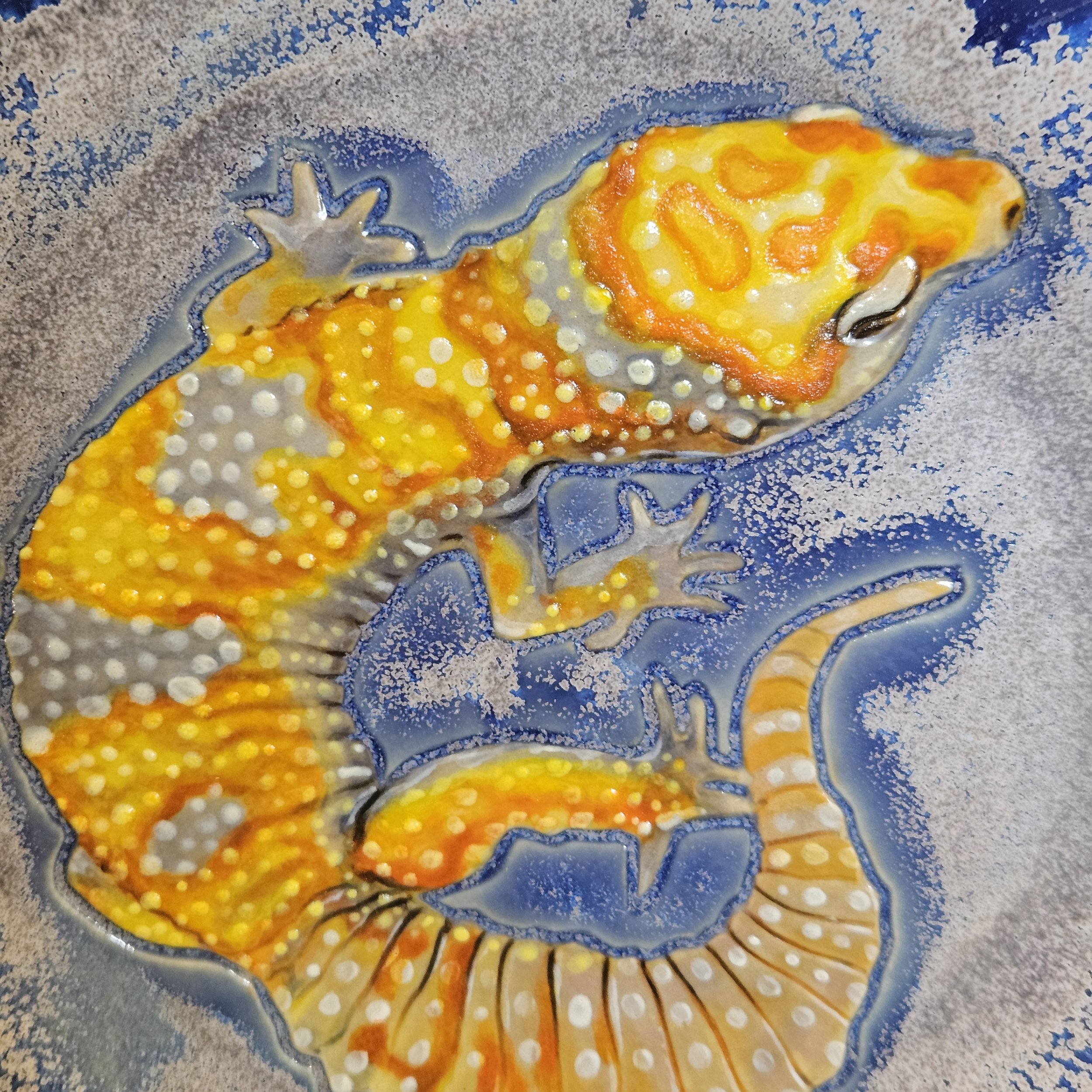
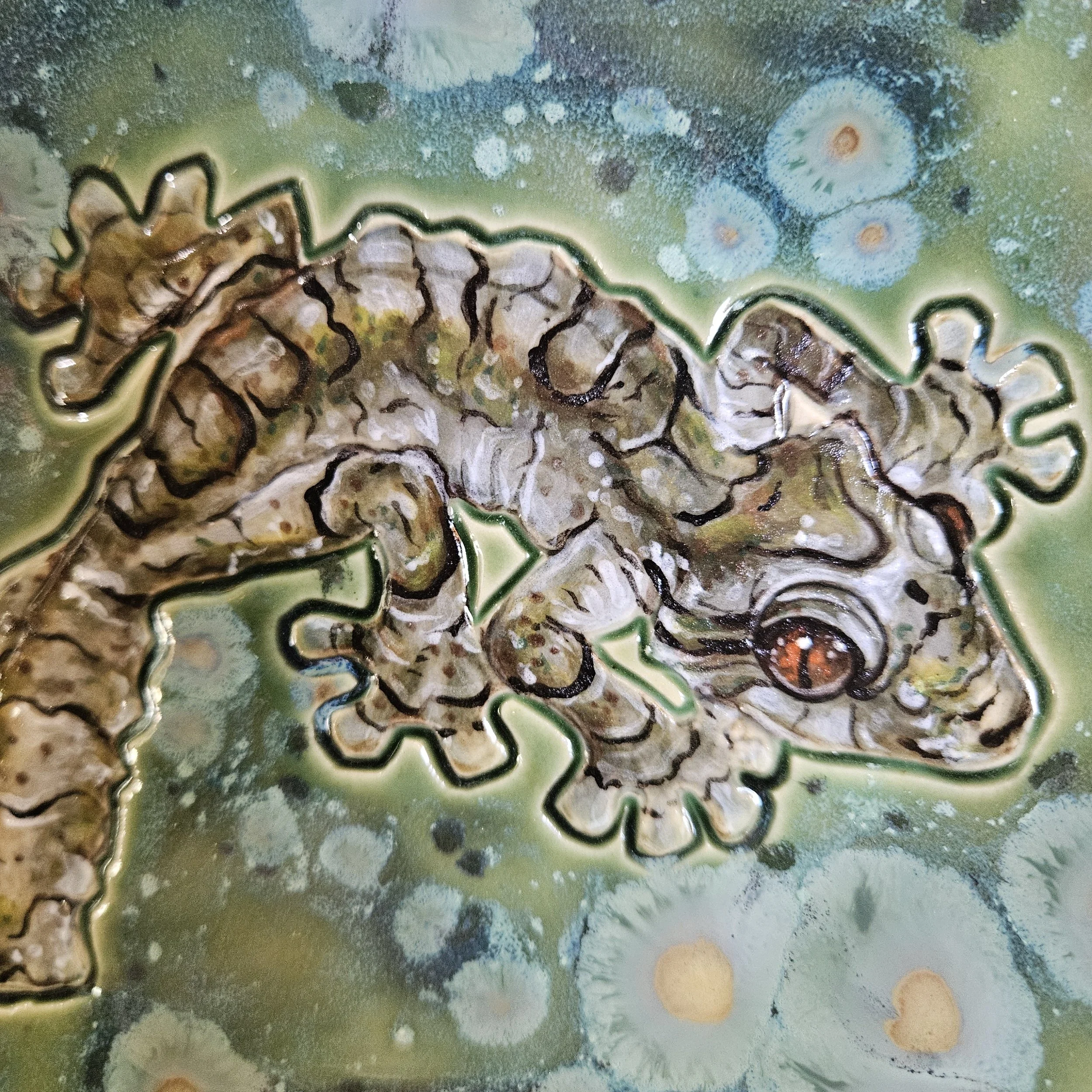
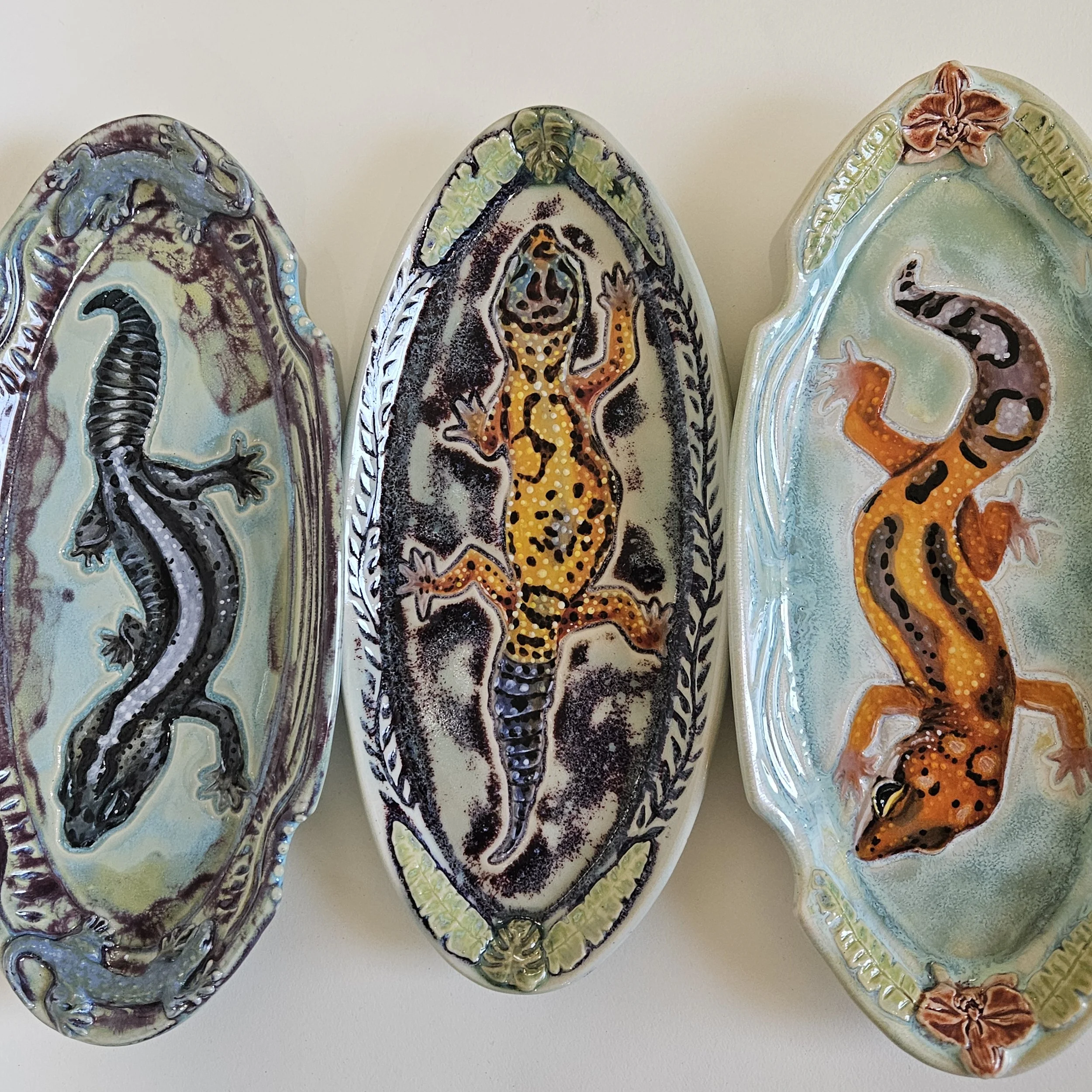
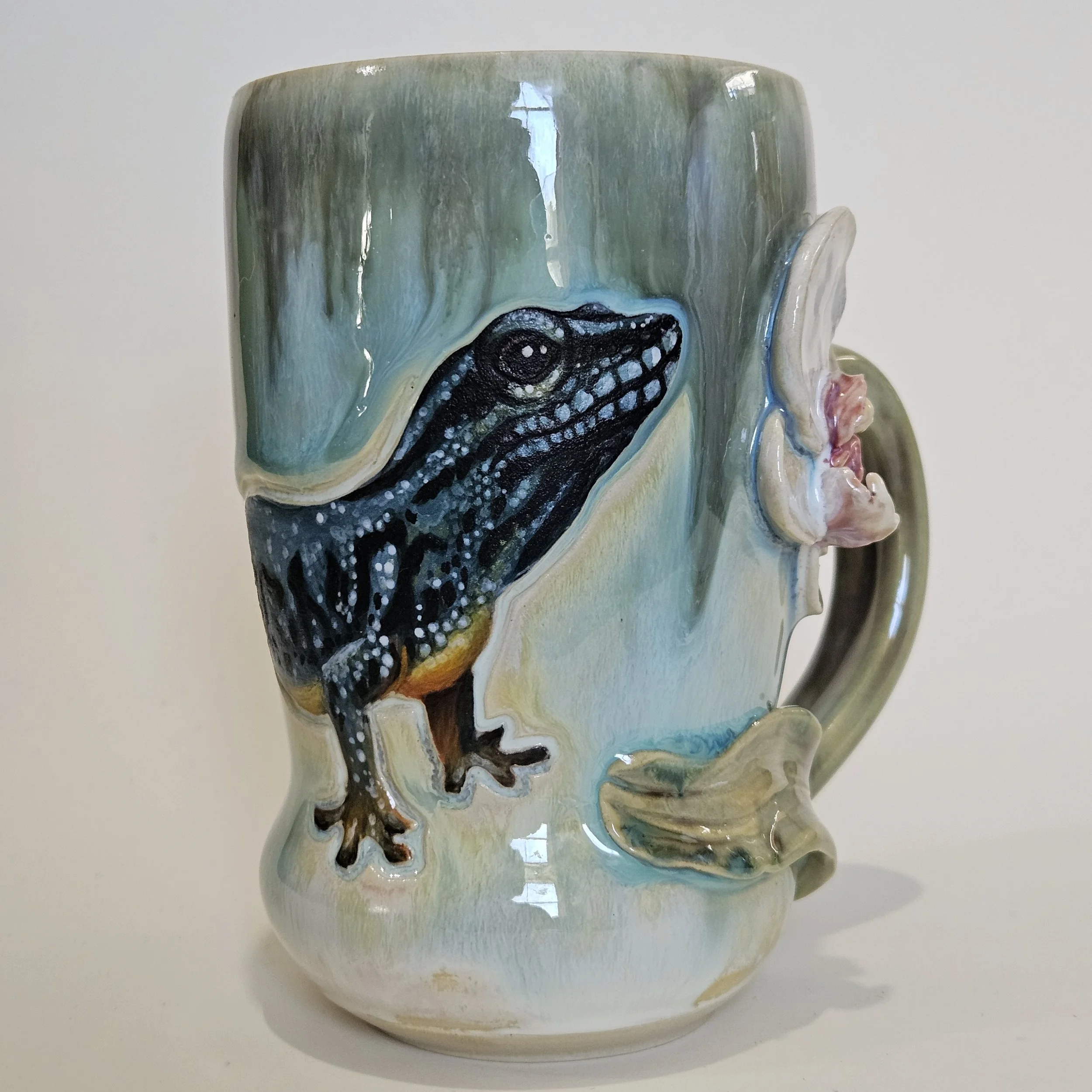
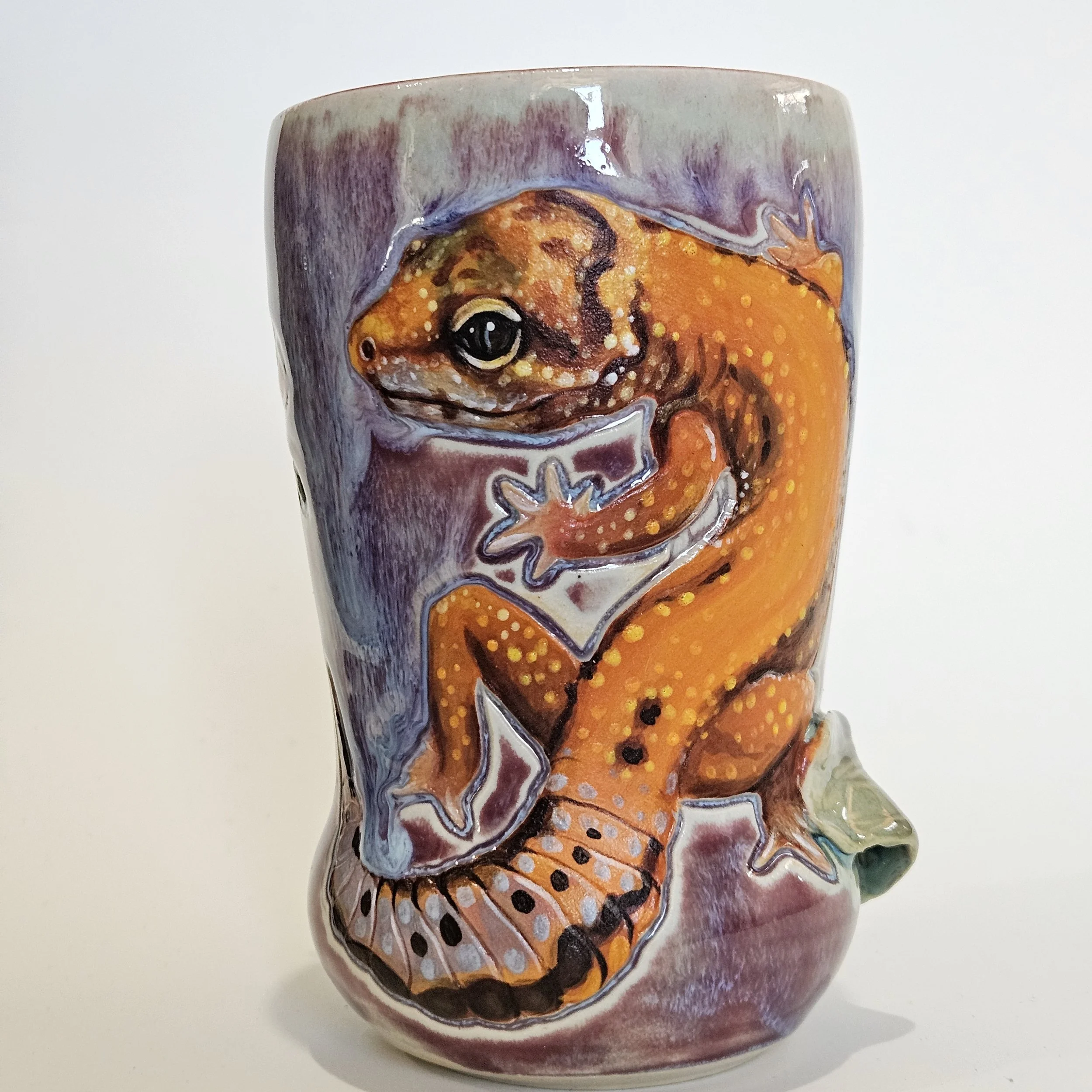
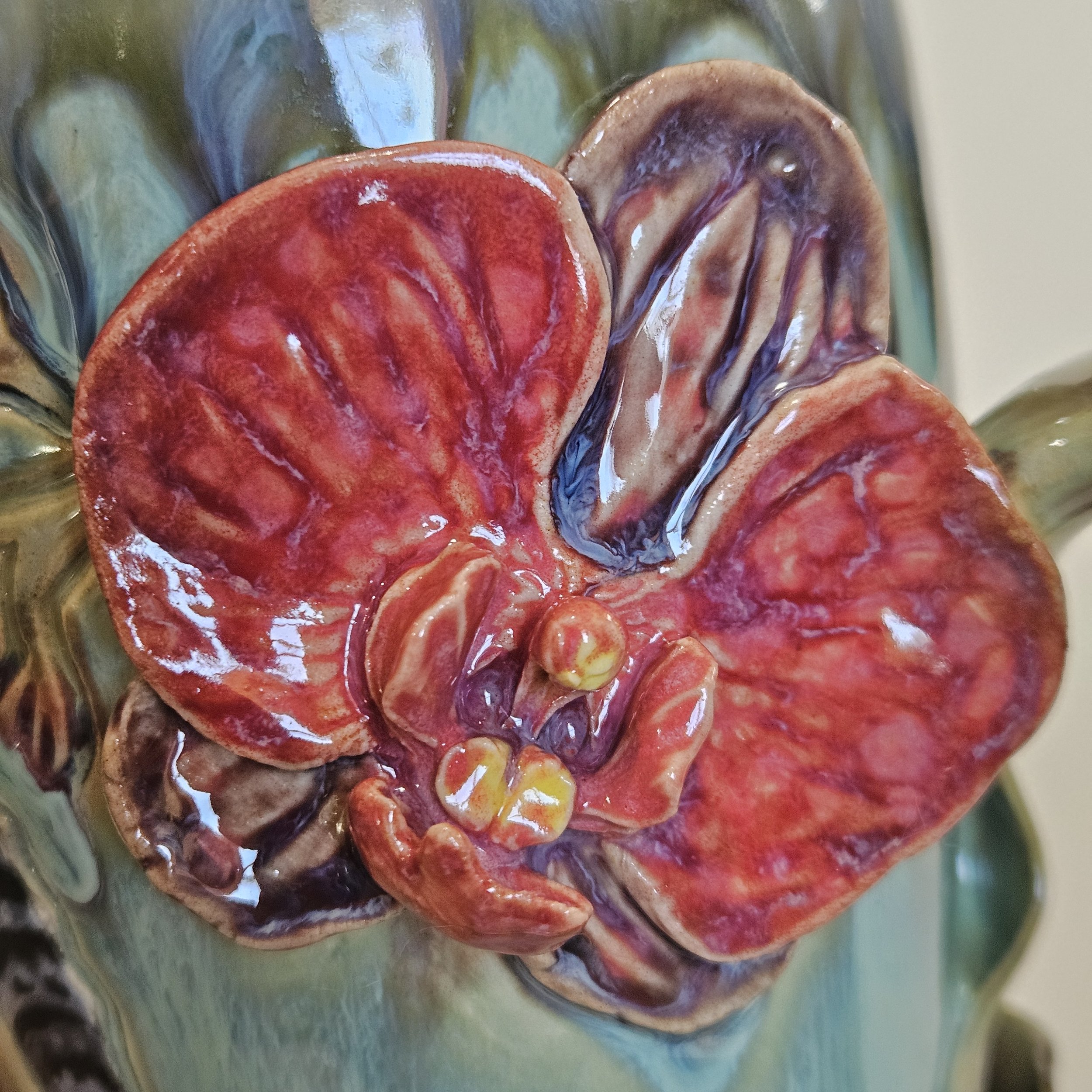
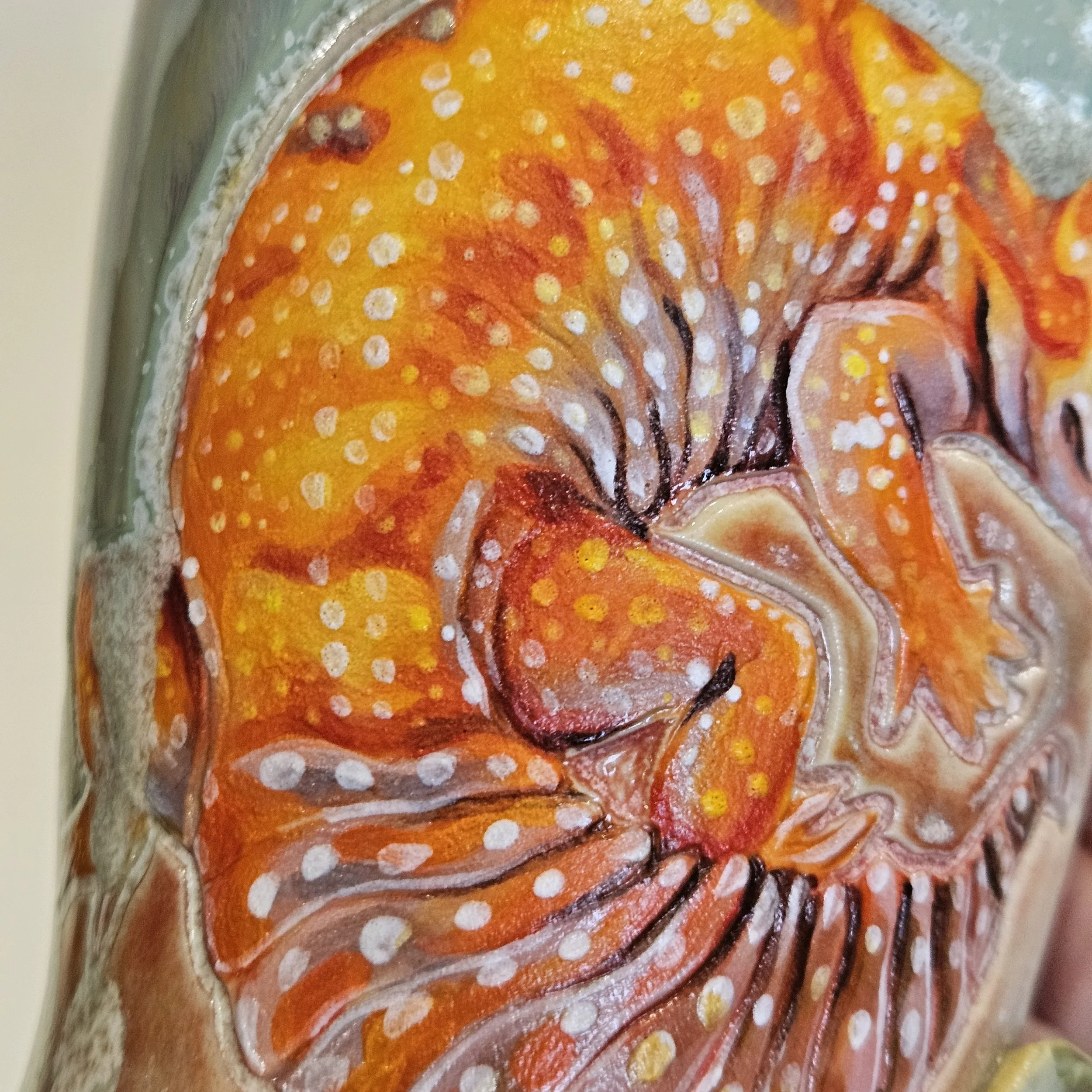
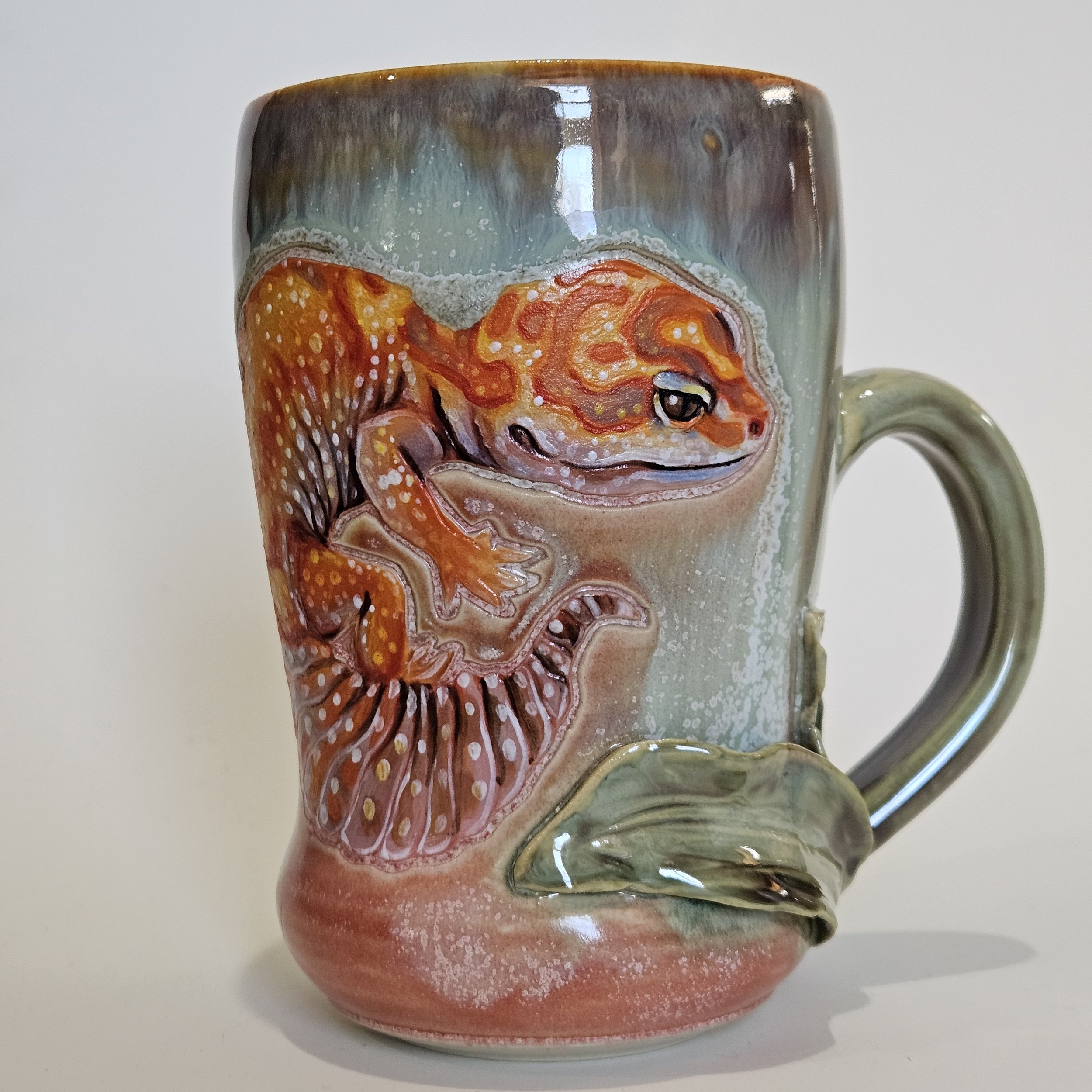
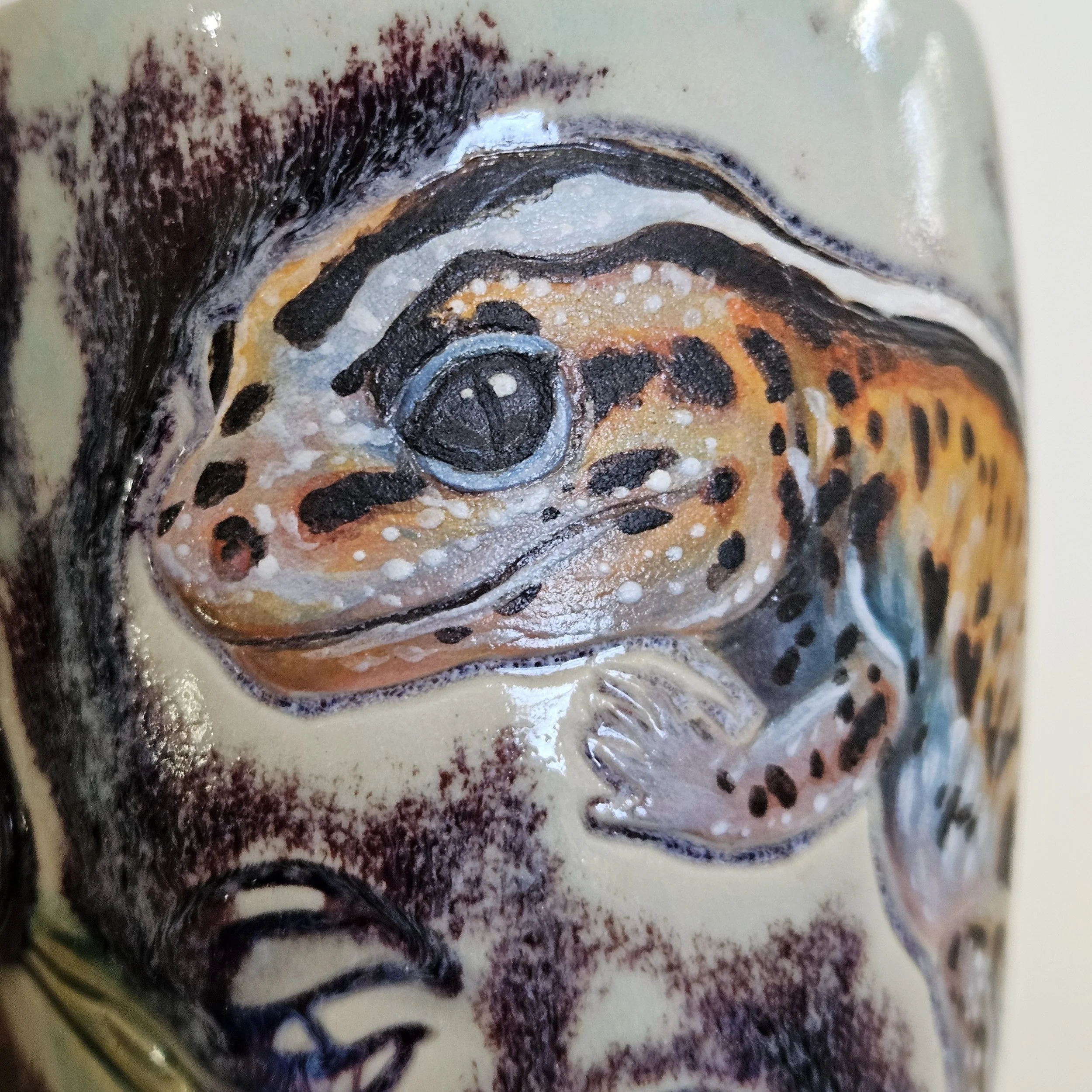
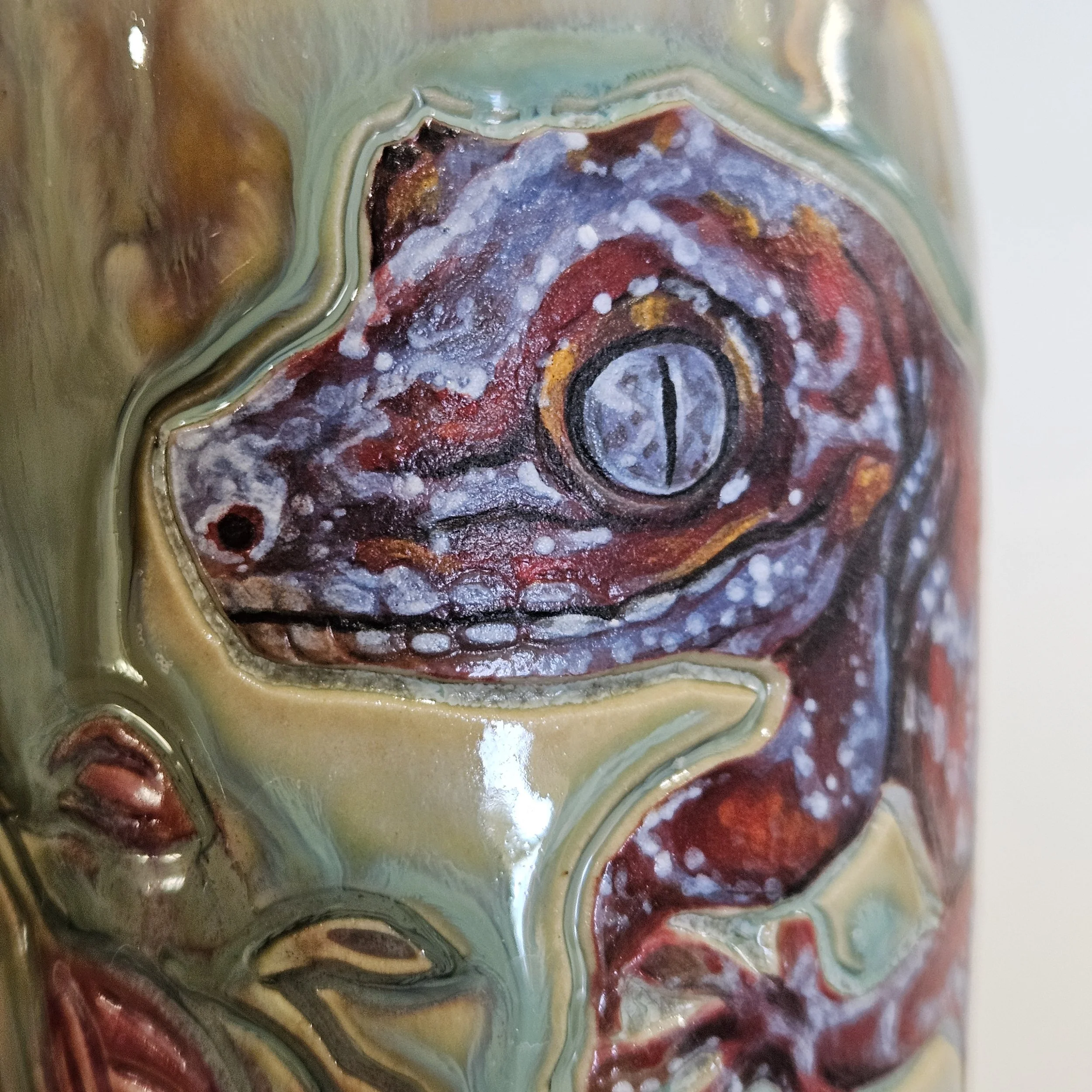
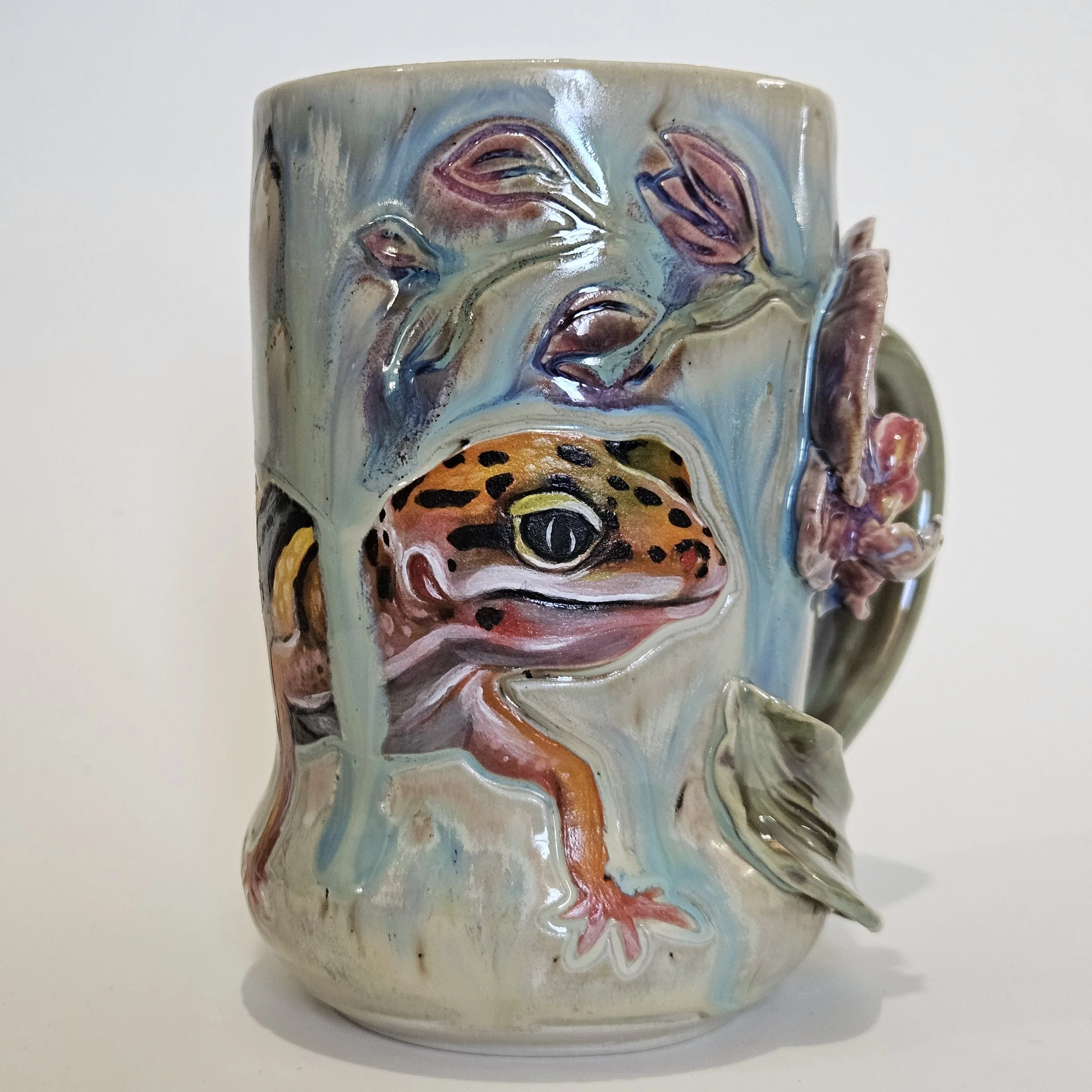
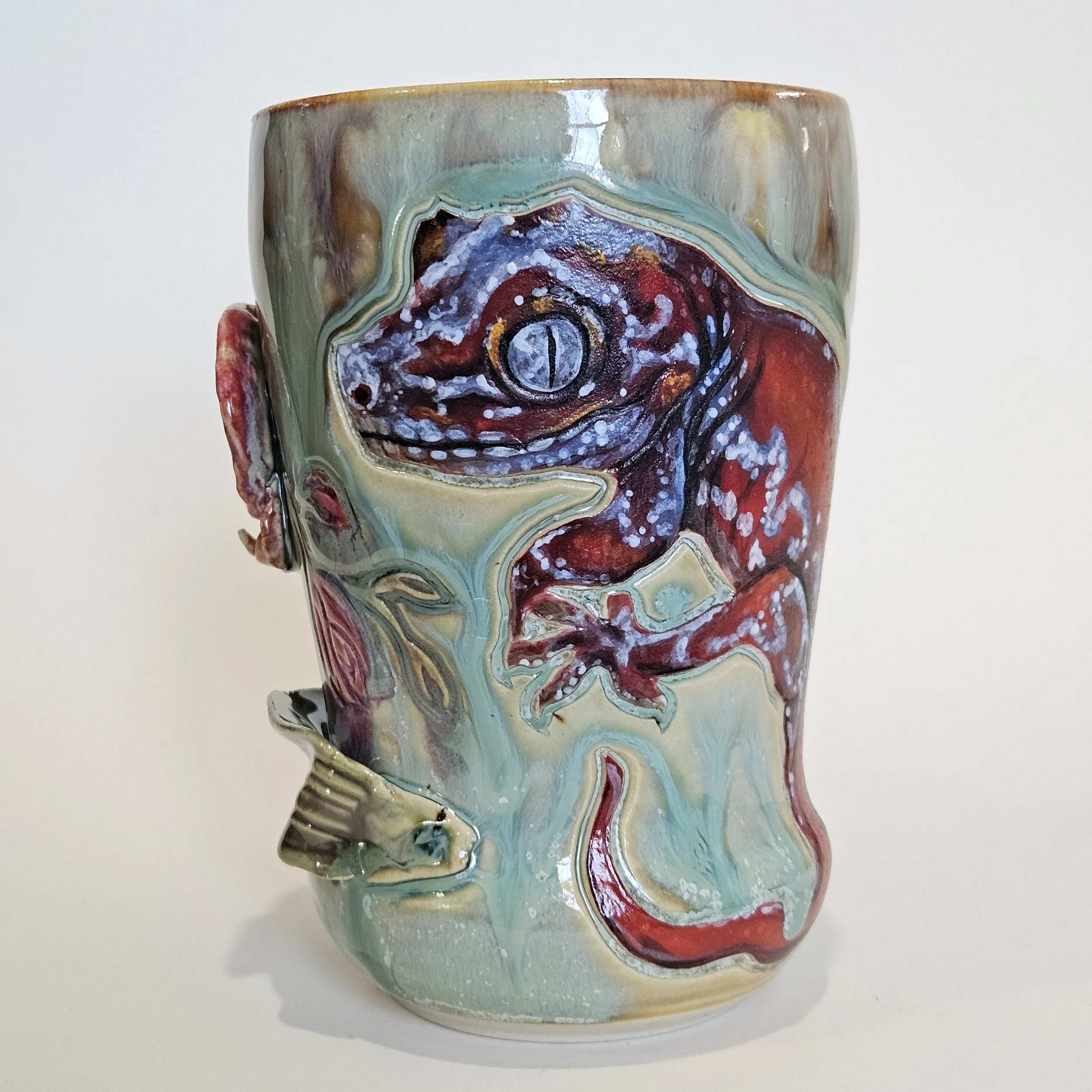
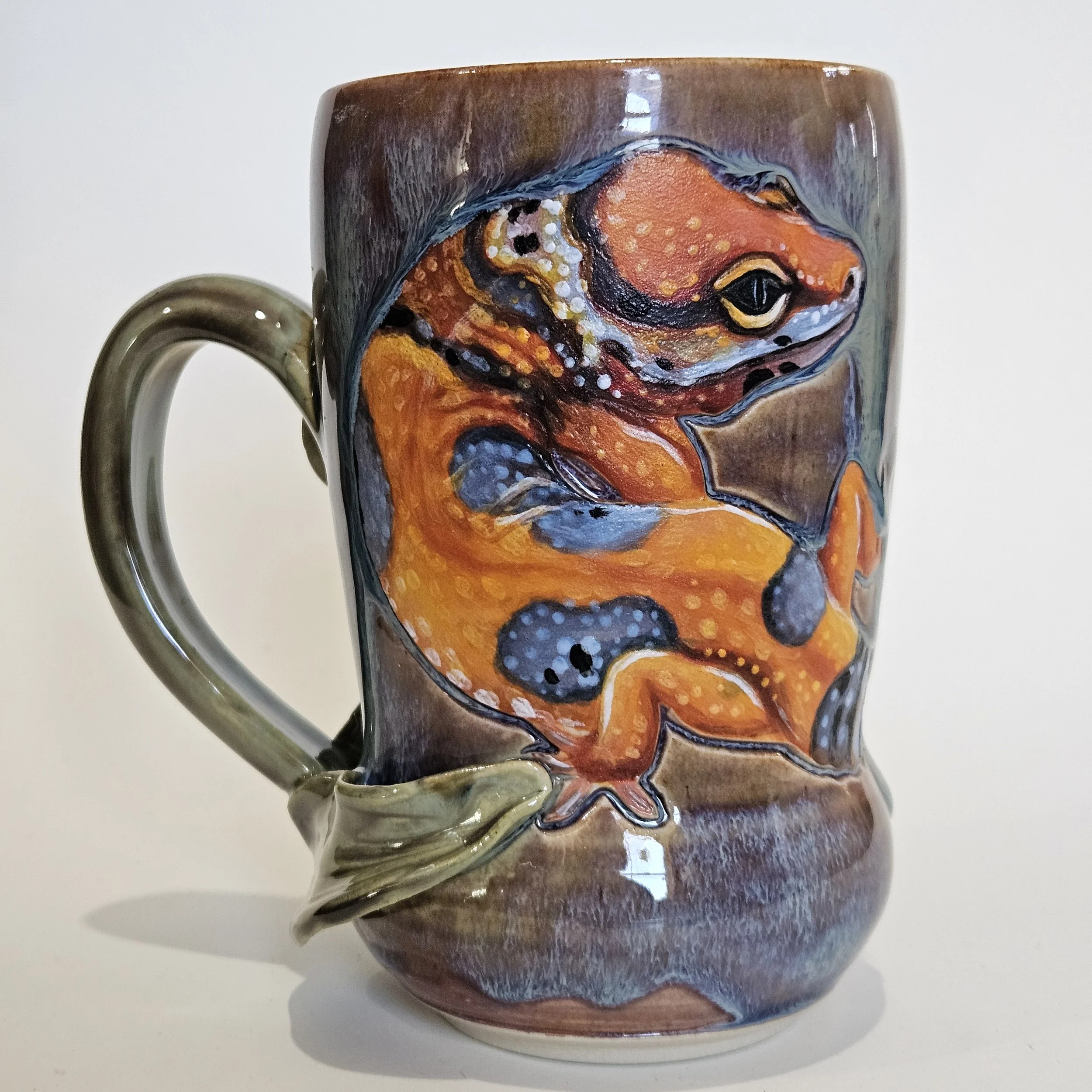
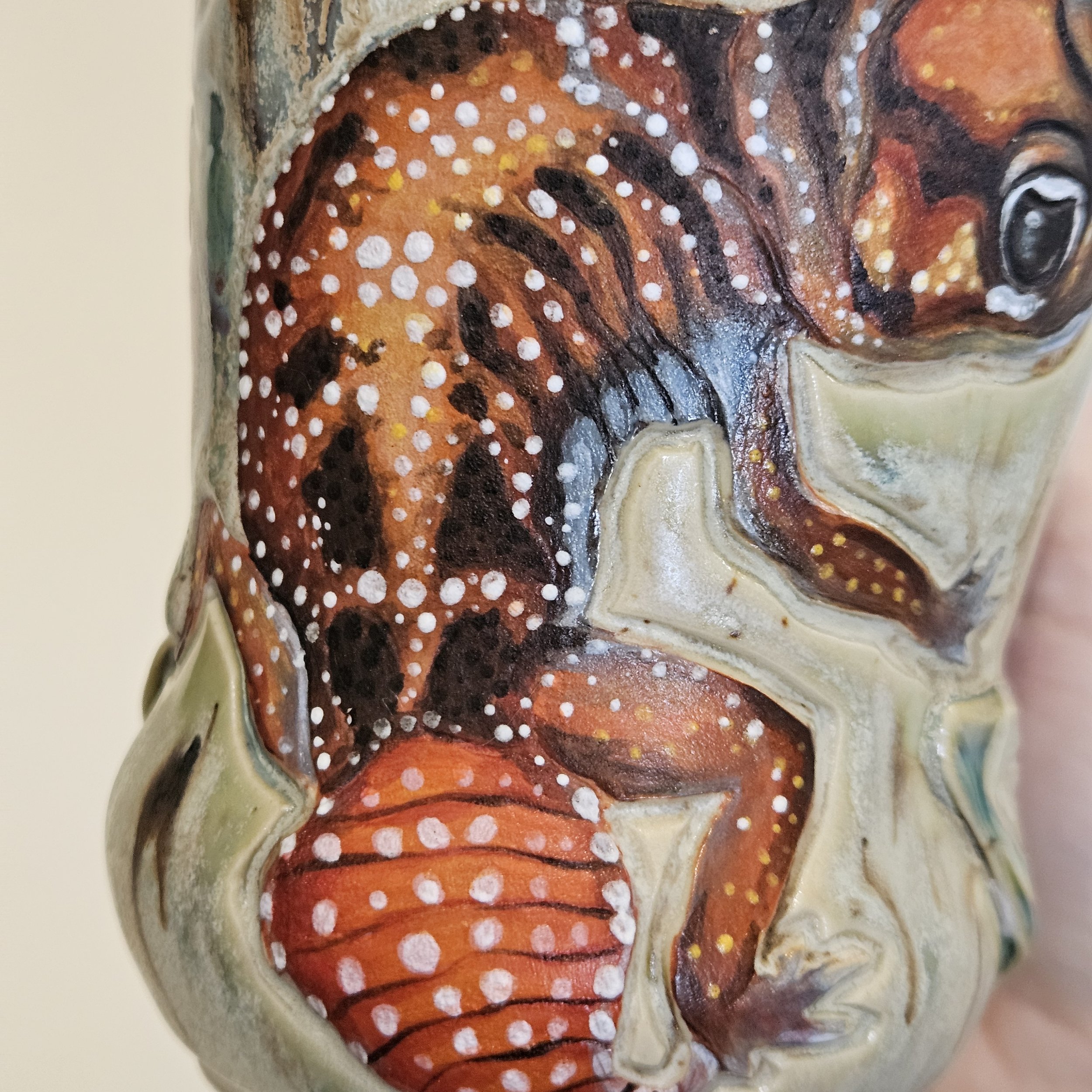
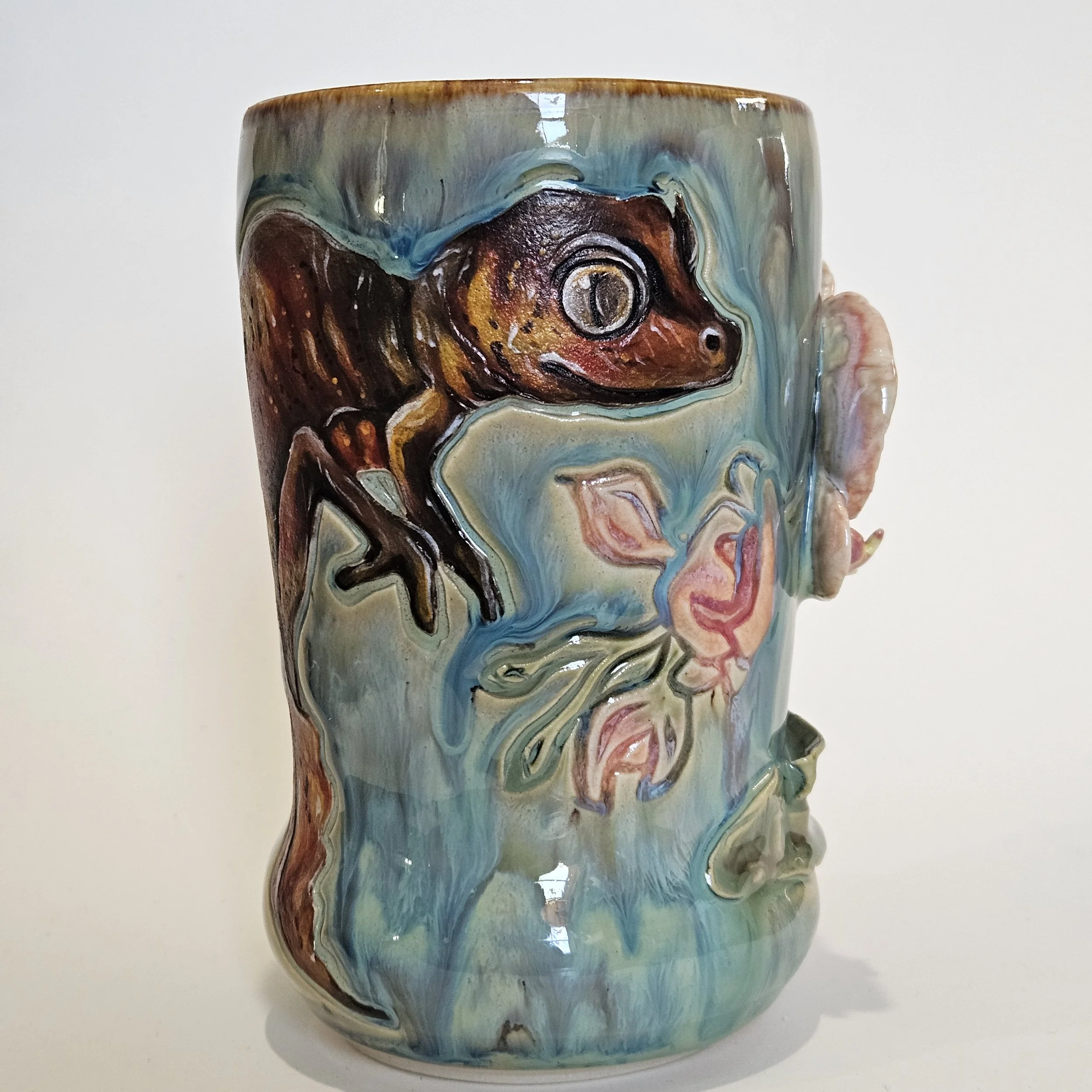
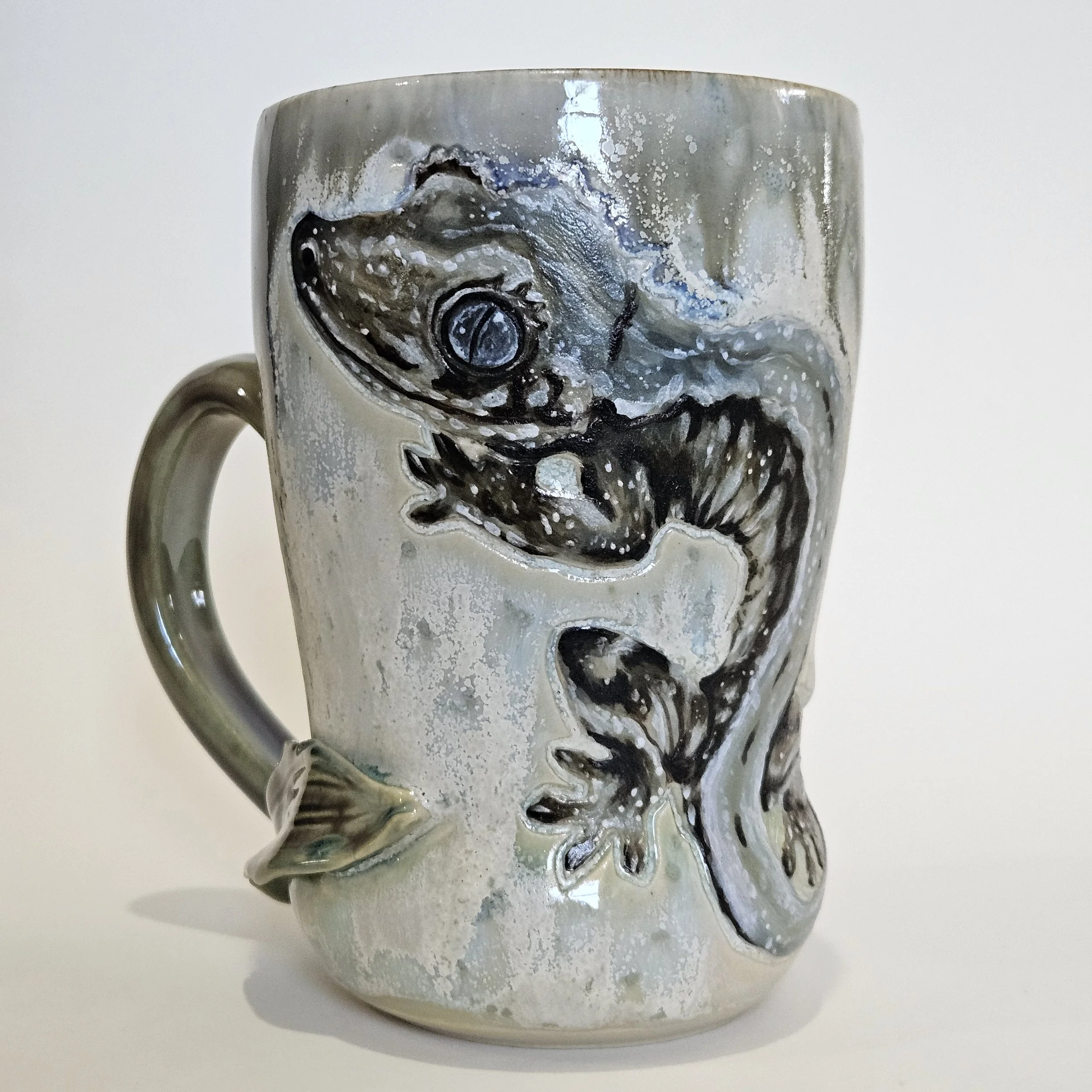
These gecko mugs are adorned with sculpted orchids. The comfortable handle acts as the orchid’s stem. At the base of the handle are 3D sculpted green leaves that hug around the surface. At the top of the handle lays a beautiful 3D orchid flower, glazed with natural orchid colors. Following the flower are more carved flowers and buds, as if there are more flowers continuing to grow. The star of the mug is a painted gecko lizard that was created with meticulous details. These realistic paintings capture the individual personality of the gecko and vibrant colors. The gecko looks as if it is crawling the side of the mug. The paintings are not clear glazed leaving them with a natural fired clay texture. Some gecko’s underglaze paint creates a texture that may feel like the real feel of the gecko’s skin. The glazes are colorful with luscious drips cascading down the surface and around the orchids and geckos. The interior glaze colors are meant to compliment the geckos, pulling out the same colors and tones of the paintings.
After my last collection of snow leopards, I was in need of a colorful subject to get myself out of my winter blues with a burst of serotonin. I always like to add a herptile to my yearly collections and adore geckos! There are so many to choose from and such wonderful bright colors. I could’ve kept on painting! These lizards have inspired me to create another lizard collection in the future because I enjoyed it so much! Look forward to salamanders in the future!
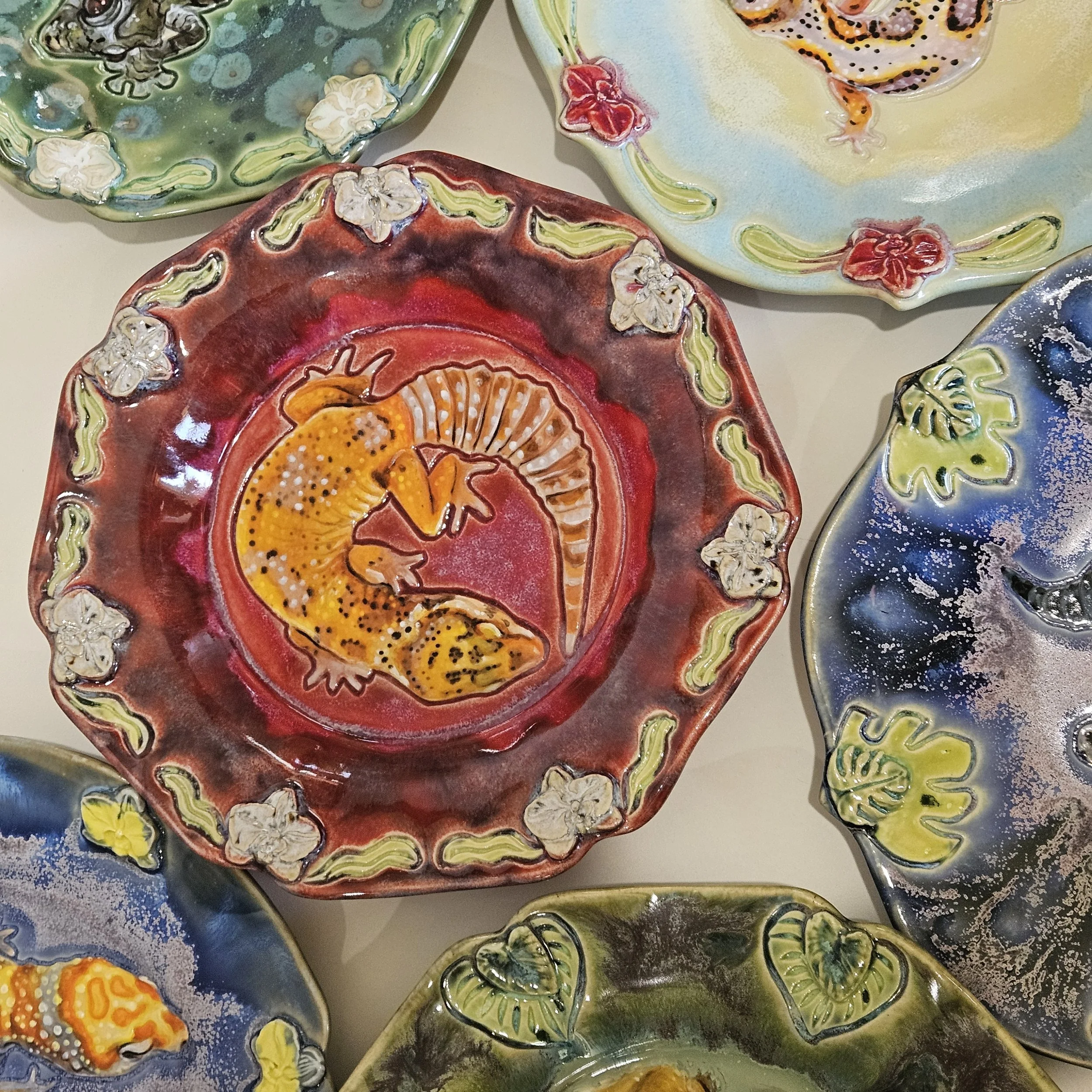
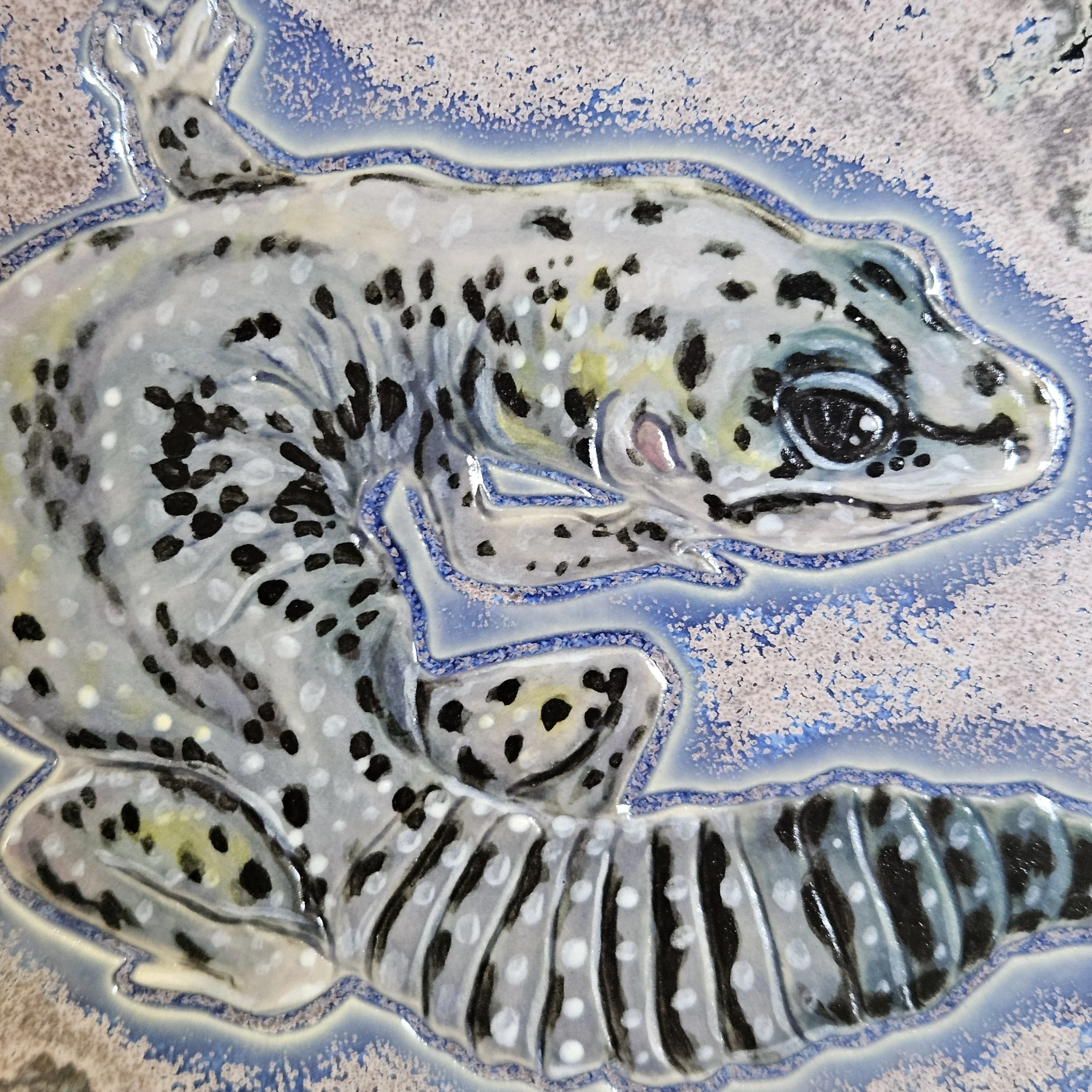
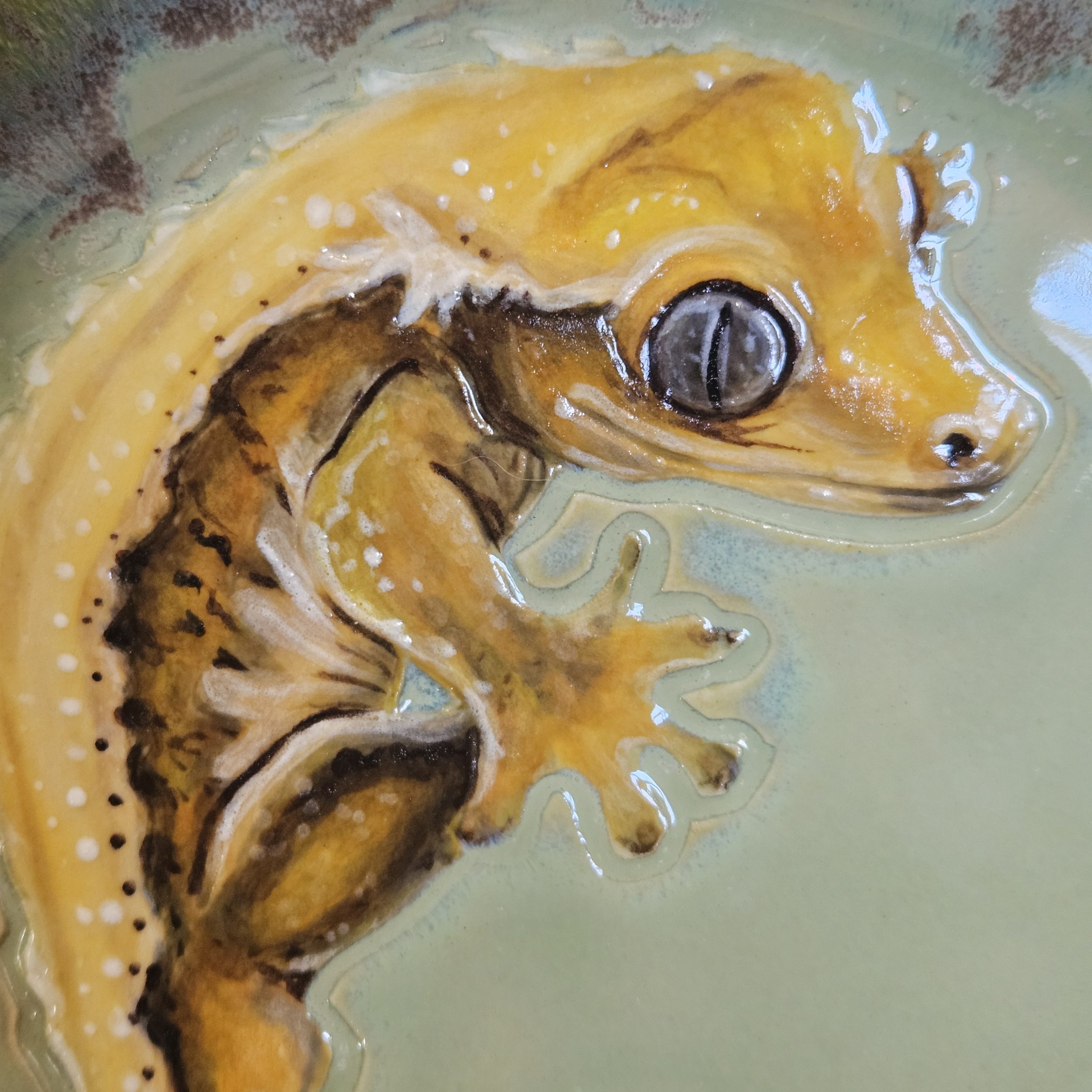








Fun facts about geckos-
Geckos can climb walls and ceilings thanks to millions of microscopic hairs called setae on their toes, which create molecular attraction with surfaces allowing them to hang from a single toe. Unlike most geckos, leopard geckos do not have sticky feet.
Most geckos lack eyelids and use their tongues to clean and moisten their eyes.
Geckos can detach their tails to escape predators, and the tail will regrow over time, storing nutrients and fat for survival.
Geckos can see colors even in very low light, with eyes 350 times more sensitive to light than humans.
Geckos continuously replace their teeth every few months, ensuring they always have functional teeth.
Unlike most lizards, geckos can chirp, click, and bark to communicate, and their name comes from the sound they make.
Geckos are mostly active at night, using their excellent night vision to hunt insects.
Some geckos can change color to blend into their environment, and species vary from brown and grey to bright green, yellow, or patterned skin.
Certain species, like flying geckos, have skin flaps that allow them to glide between trees.
Geckos typically lay eggs in pairs rather than large clutches.
In some species, the sex of hatchlings is determined by the incubation temperature.
Some geckos, like mourning geckos, can reproduce without males.
Geckos can survive up to two weeks without food and tolerate a variety of habitats, from deserts to human homes.