OWLS

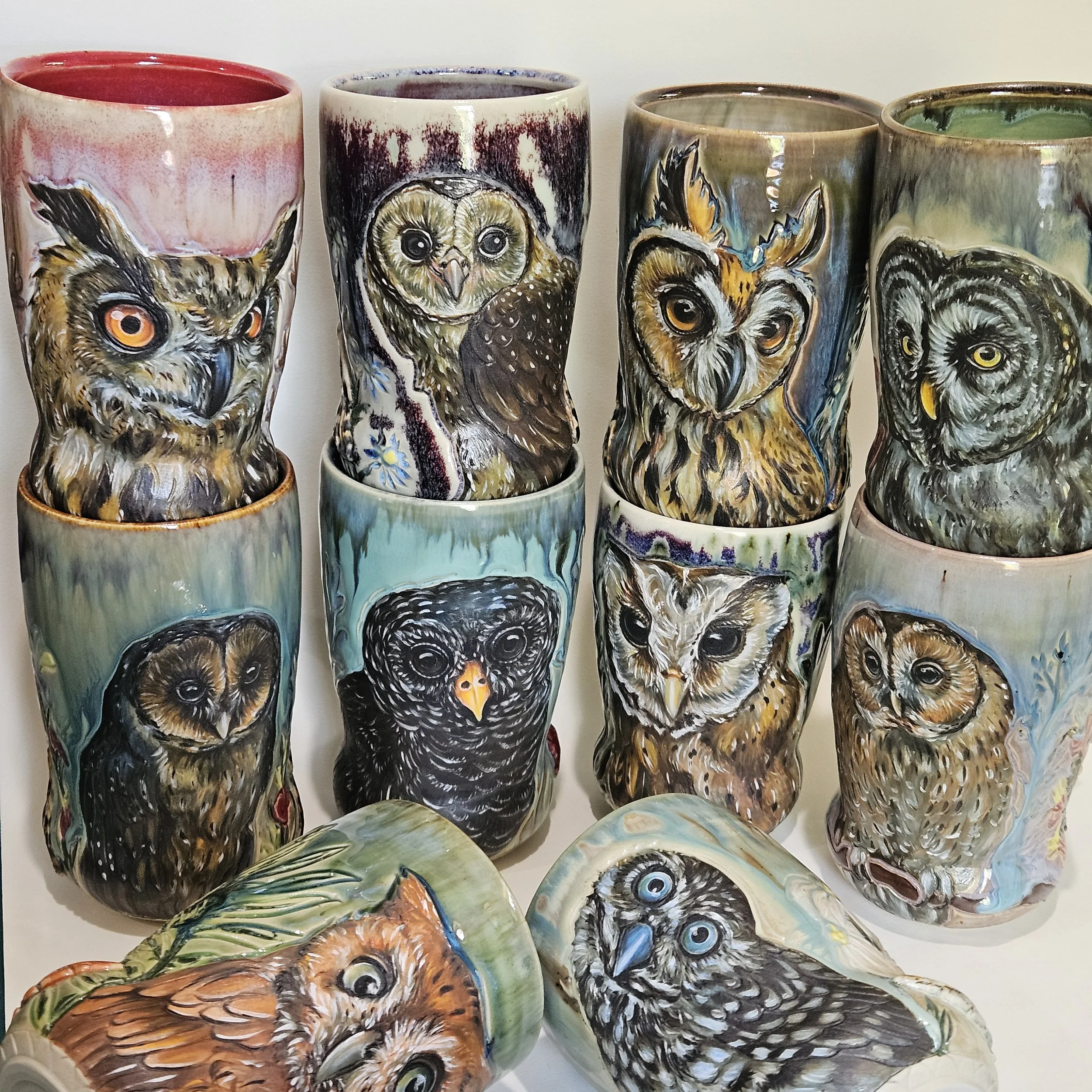
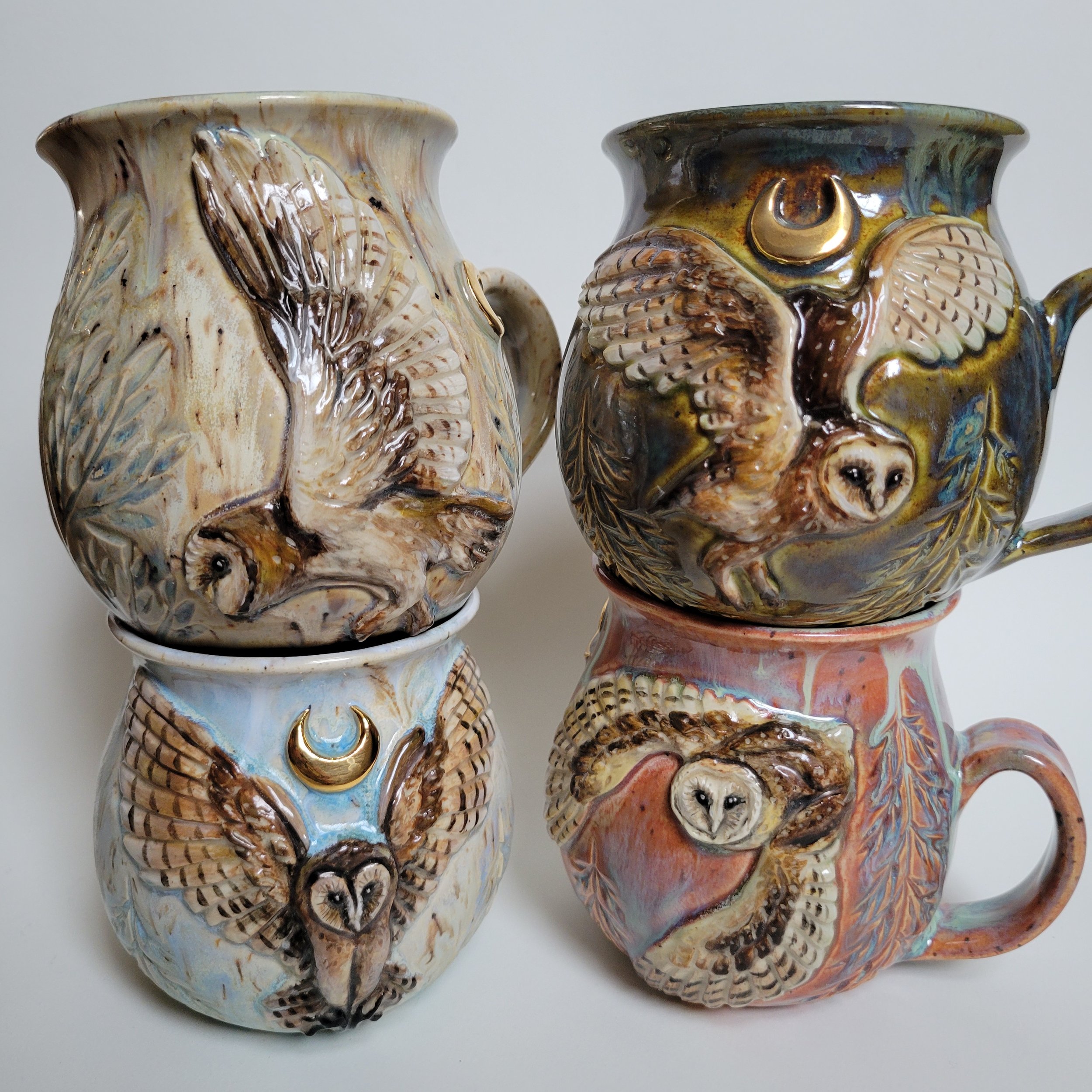
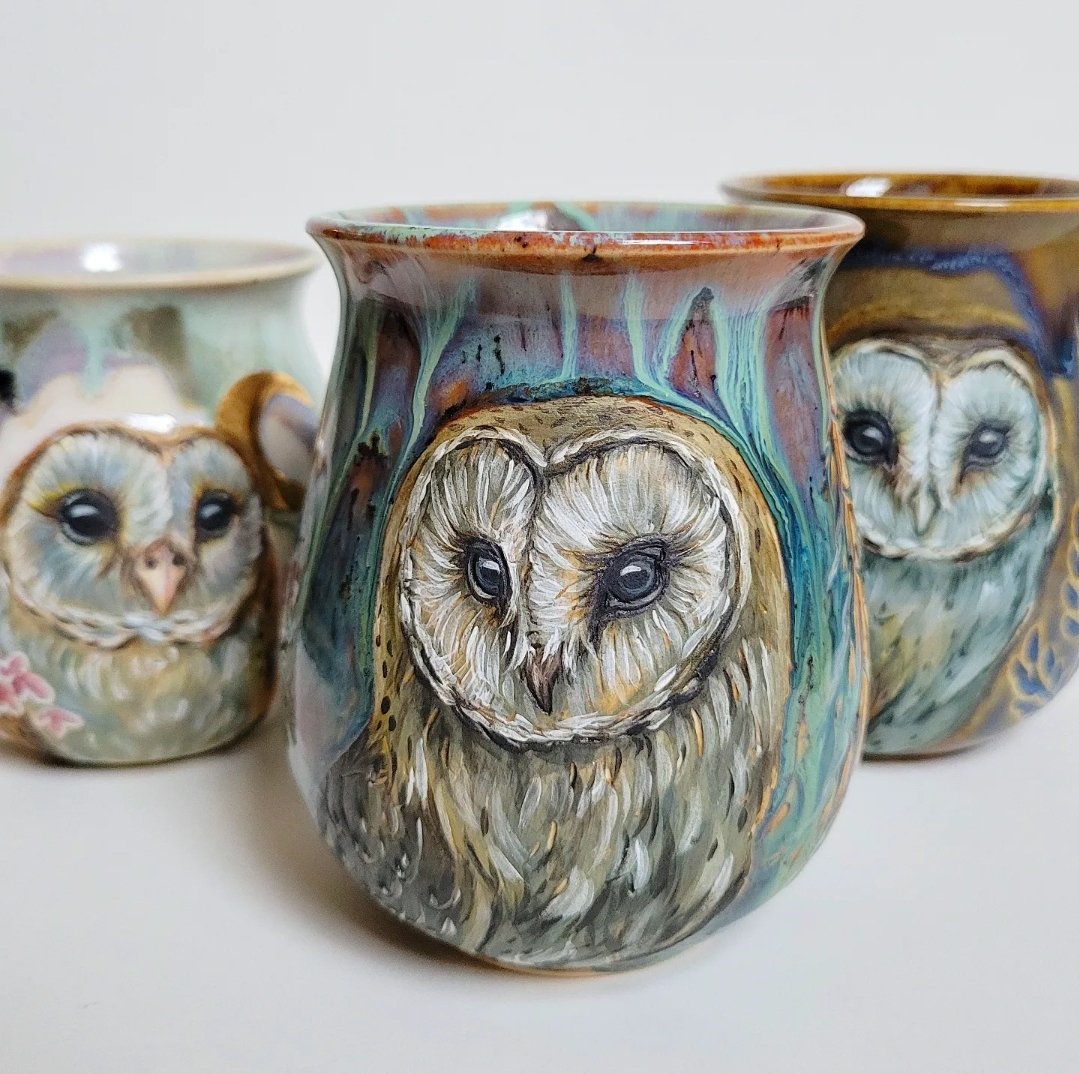
Barn owls are gorgeous creatures. I knew I wanted to paint an owl collection eventually. When it came time to paint, I decided to focus on barn owls. I love the shape and movement of their face feathers. This first owl collection is 2022 was the first time I experienced a kiln heart break. Half of my collection stuck to the kiln shelves from glaze drips. Unfortunately, at this time I did not have the advancer kiln shelves, so all of the stuck mugs cracked. This felt humbling but absolutely cruel in the moment. I took a long break from owls after that.
In 2025, I decided to come back to owls. I created a few more owl mugs in my BIrds collection. I absolutely loved painting owls again. They are one of those animals that come so easily to me.
A year later, May 2026, I decided to make a whole bunch of owls! I painted 15 more owls! Along with the typical mugs I also made a few plates. I am happy to say the unfortunate owl mug destruction of 2022 was a learning curve and I am better for it.
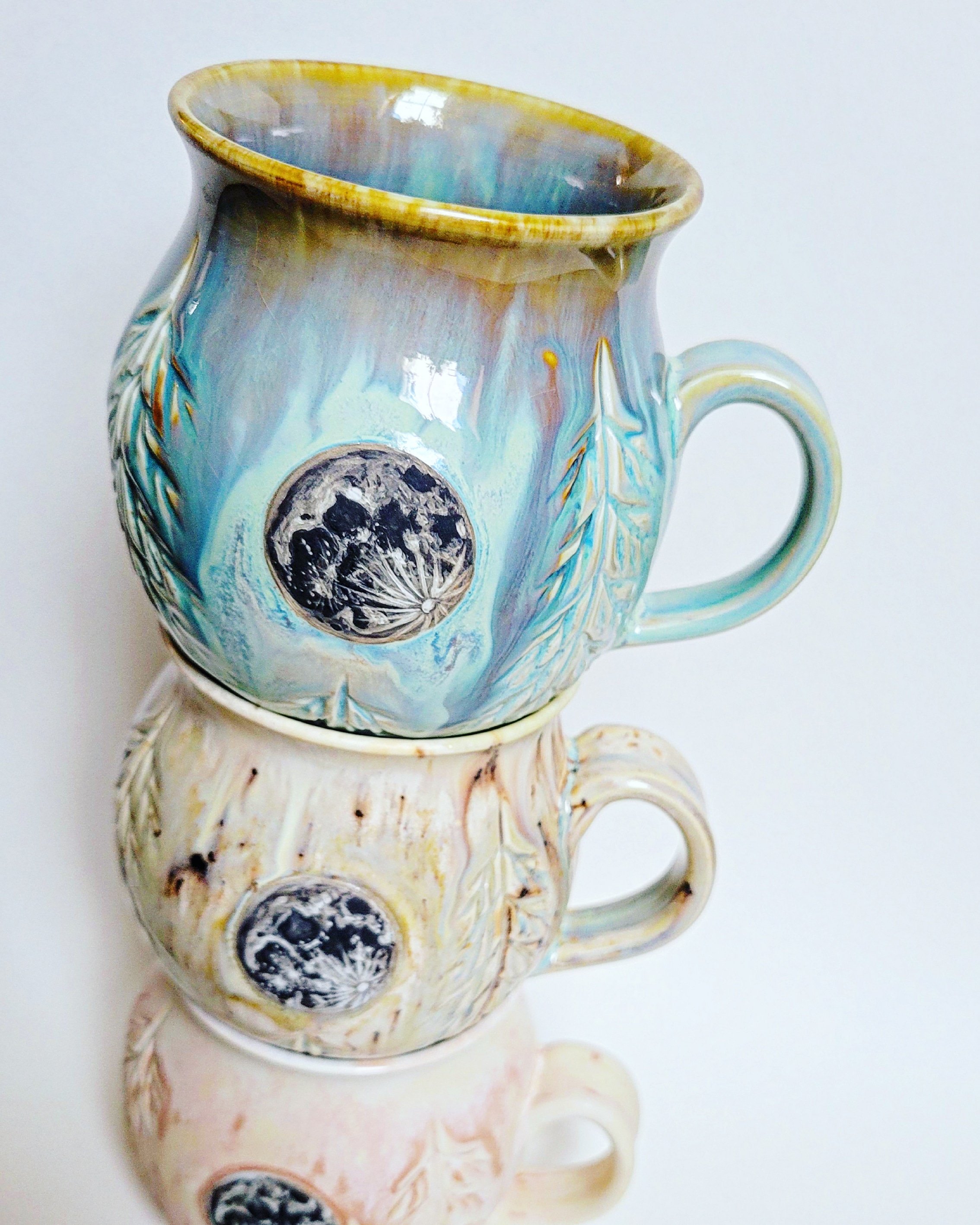
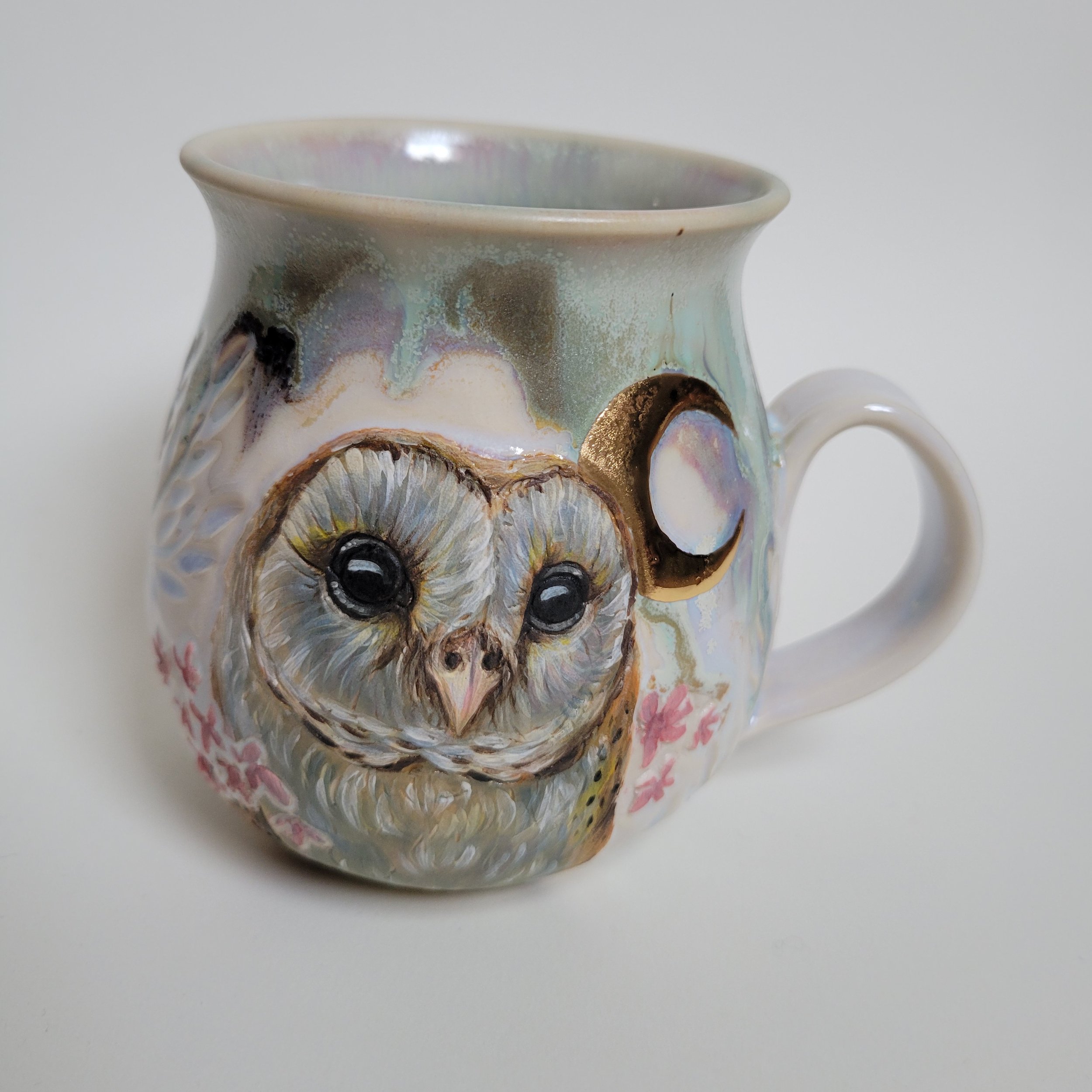
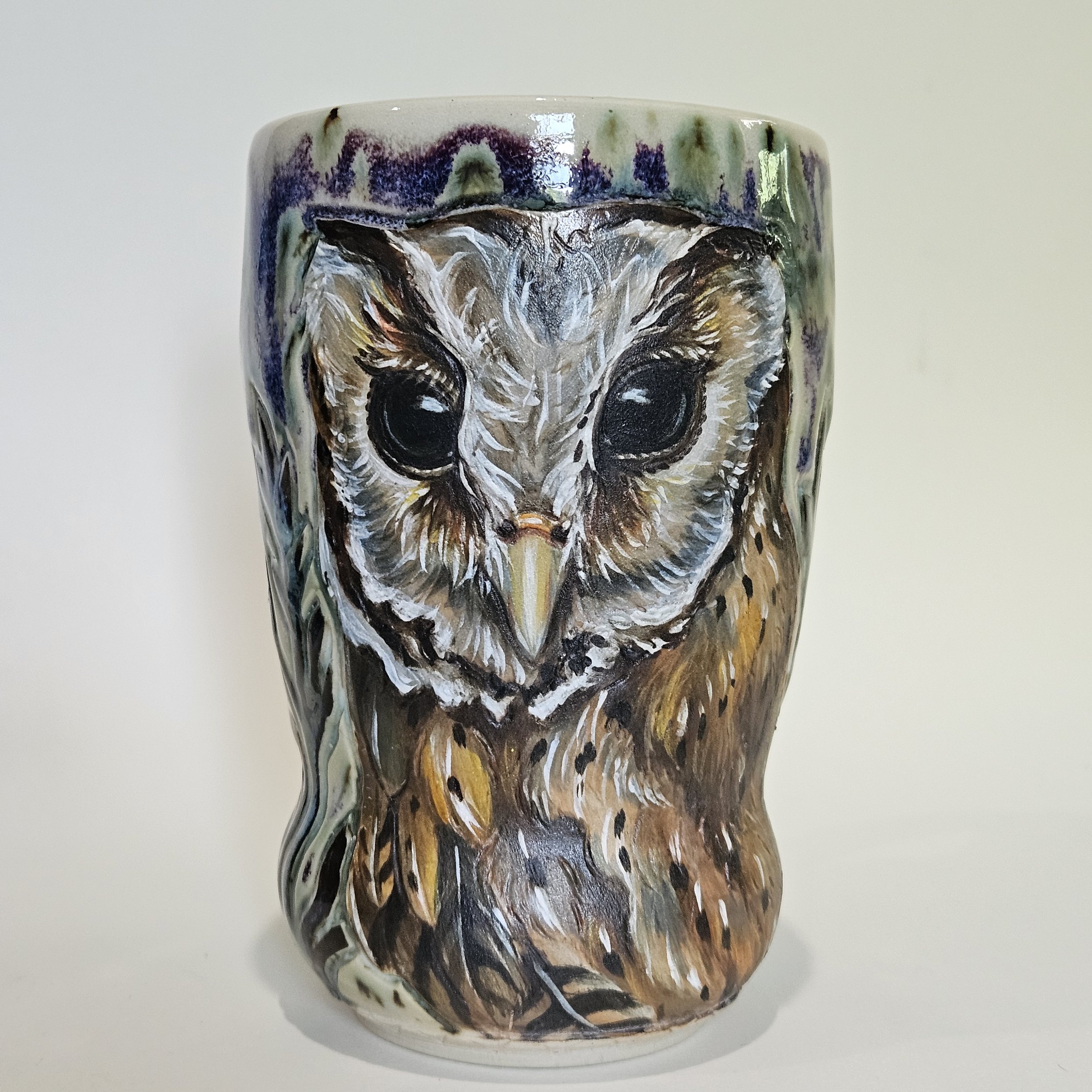
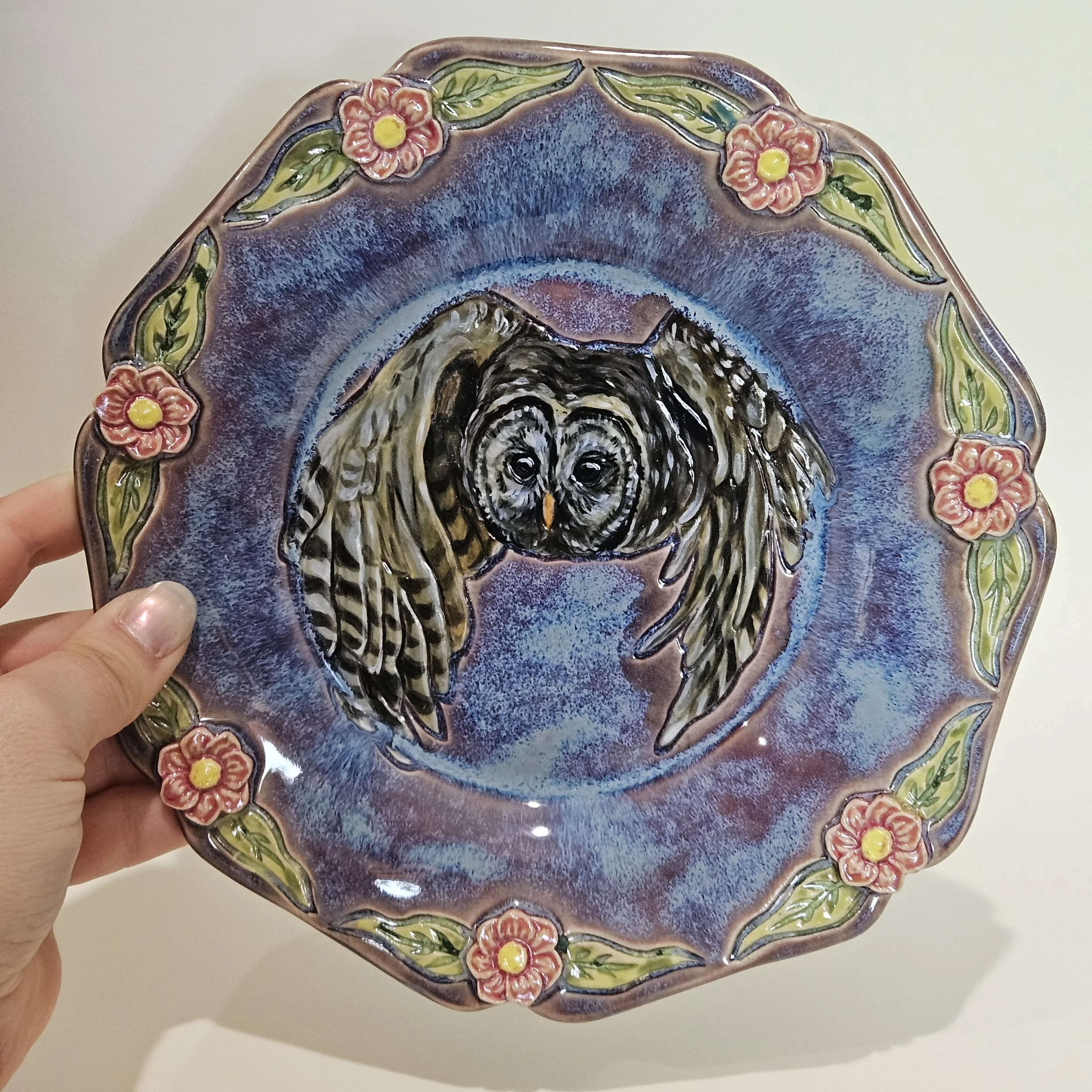
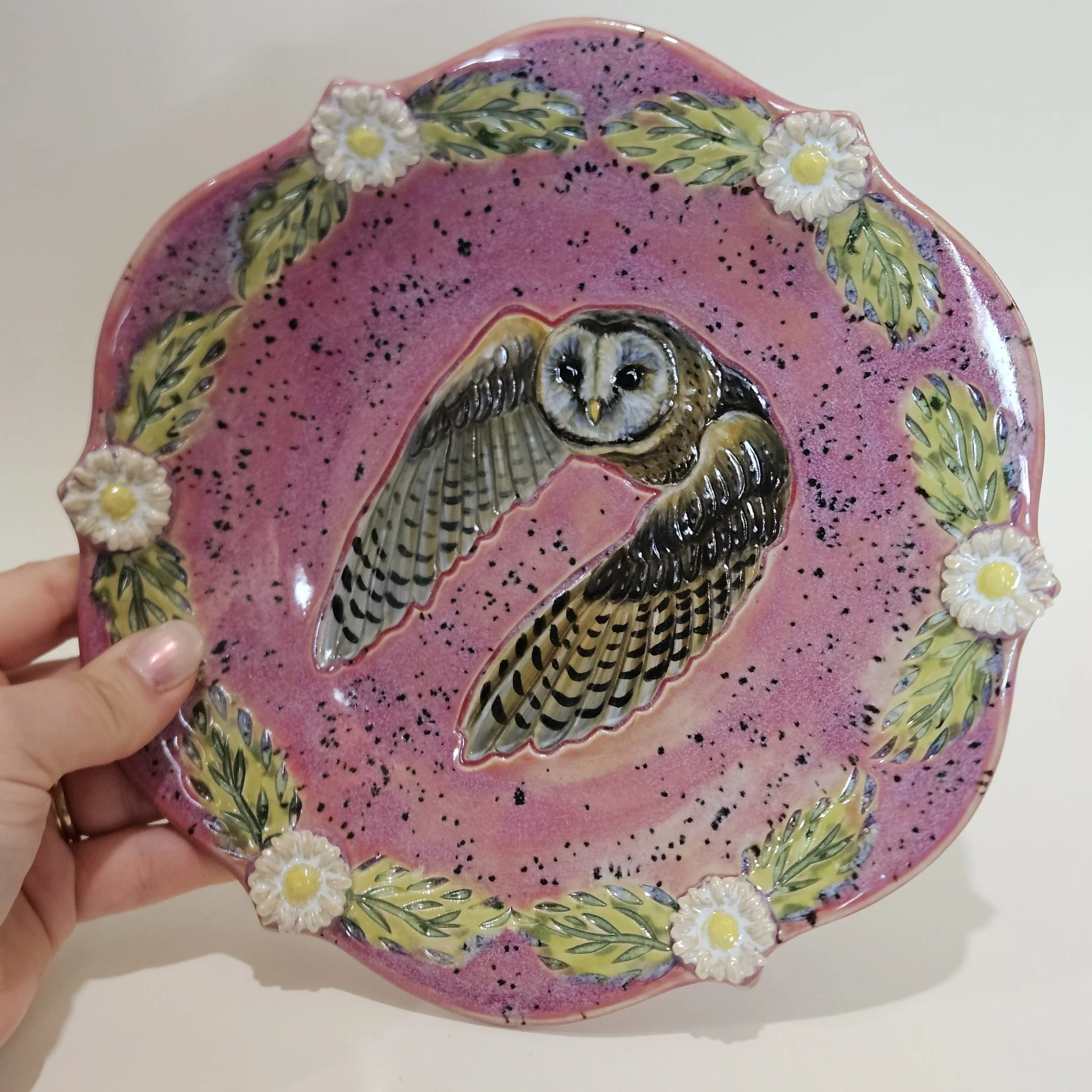
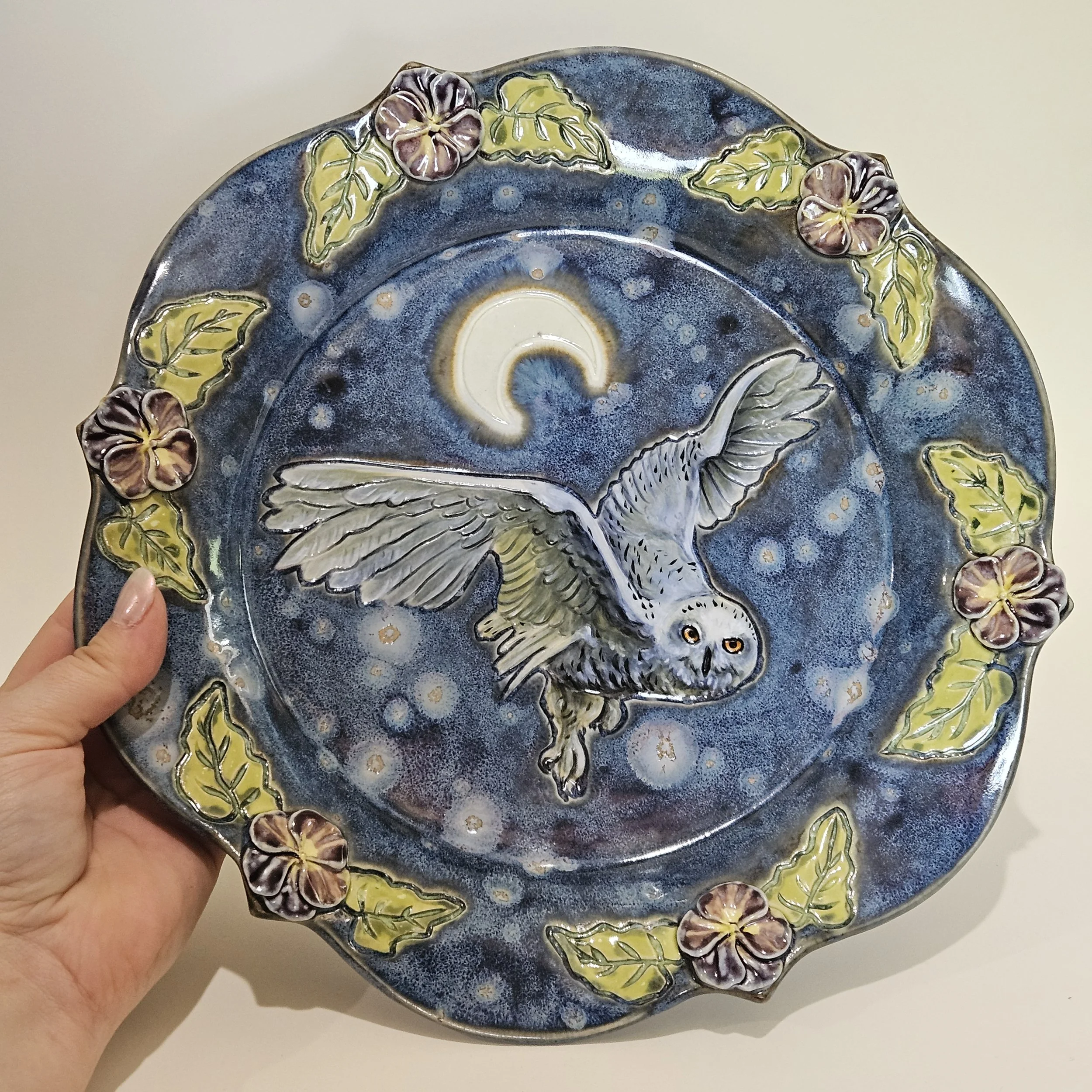
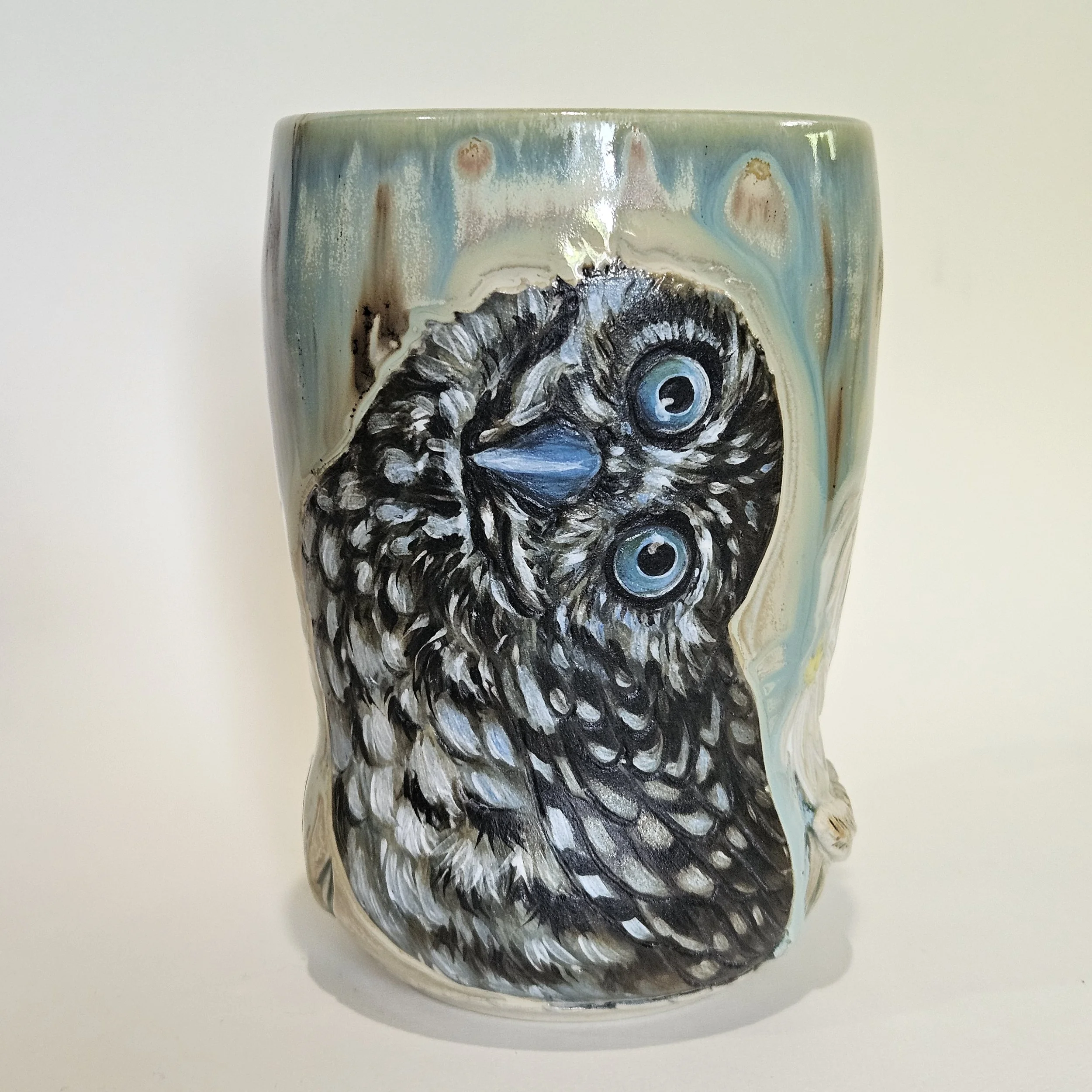
Facts about barn owls I learned while creating-
A barn owl’s diet consists of small critters - insects, birds, reptiles, rodents, and fish.
Owls have excellent hearing being able to catch prey in complete darkness or snow.
Barn owls have a wing spand of 39-49 inches and only weight a few pounds!
They have long legs covered in feathers which grow up to 16 inches long.
Barn owls’ nest in various places - trees, abandon buildings, chimneys, and sometimes the ground.
Breeding season for the bird is March to August. Mated pairs are monogamous. The courting is long before the female gives in while the male hunts for her. Successful pairs tend to the same nest for 20-30 years!
Barn owls lay 3-6 eggs per nesting season. Laid in April - May, the eggs hatch after 32-34 days.
Young barn owls can start to fly at 2 months old and become independent at 10 weeks.
Barn owls can catch up to 1,000 mice per nesting season.
Unlike hooting, barn owls produce many weird sounds from hissing to screeching.
Barn owls are widespread globally, but populations are declining due to hunting habitat loss. With no hunting grounds, means no food, no courting, no babies.
Barn owls are considered endangered in Canada.
A rare phenomenon in the animal kingdom - instead of males, female barn owls are prettier!
Studies show that heavily spotted females may be more resistant to parasites and disease.
Owls prefer their nesting areas to be near wetland or grasslands for the best hunting.